Mindset Maths
Topic outline
-
Developing growth mindsets

In Units 1 and 2, we've identified the generic aspects of mindset, followed by the implications this has on education in Scotland. In Unit 3 we're now going to explore the practical application of mindset in a classroom, along with tools and techniques to make growth mindset behaviours common in your school.
As a reminder, the learning intention of Unit 3 will focus on:
-
Critically examine mindset behaviours and professional practices (that contribute to a growth mindset environment) and understand the impact this has on staff.
“Students tend to have more of a fixed view of maths skills than of other intellectual skills”Carol Dweck
-
Activity 1
Welcome to Secondary School
Across many Scottish local authorities, testing of first year pupils in maths is commonplace. For some this test is carried out in primary 7, prior to pupils leaving primary school, then marked by secondary maths teachers. For others, this test takes place within the first few weeks in secondary school. However, for any assessment the question of “What am I assessing?” and “Why am I assessing?” should always be considered.

Good assessment feeds into learning and teaching. In mathematics, learners are frequently tested, awarded marks and records of achievement are produced (a summative assessment of learning), in order to summarise the progress made, but this does little to promote learning. Effective assessment practices, however, enable teachers to build on learners’ prior knowledge, and match their teaching to the needs of each learner. A teacher’s assessment practice is also influential in developing a learner’s sense of self (Boaler, William, Zevenbergen. 2000). Swan (2005) asks us whether students are being given low-level assessment tasks which are mechanistic and can be completed by imitating a routine or procedure without any depth of thought.
“Assessment approaches need to promote learner engagement and ensure appropriate support so that all learners can achieve their aspirational goals and maximise their potential.” Building the Curriculum 5: A framework for assessment
One of the most important factors in a young person’s learning is known as their Opportunity to Learn (OTL). It comes as no surprise that research has shown (Wang, 1998; Elmore & Fuhrman, 1995) that when pupils are given access to higher level content, they attain to better levels.
Given this, placing young people within specific learning sets in accordance with their test results can often be incorrect and damaging.
In August 2017, the Scottish Government introduced standardised testing through the Scottish National Standardised Assessments (SNSA) as a means to measure a child’s progress, provide diagnostic information and support teachers’ professional judgement. They were set out as part of the National Improvement Framework for Scottish Education, in line with Curriculum for Excellence (CfE), to assist teachers to help improve outcomes for all children.
Across Scotland, throughout primary 7, children are tested in reading, writing and numeracy (not mathematics). Although these assessments can be carried out early in the school year in order to provide diagnostic information, more often they are administered at the end of the school year to inform teacher judgements of whether a child has achieved a specific CfE level. No matter when they are administered, the results should always be shared with the pupil’s next teacher.
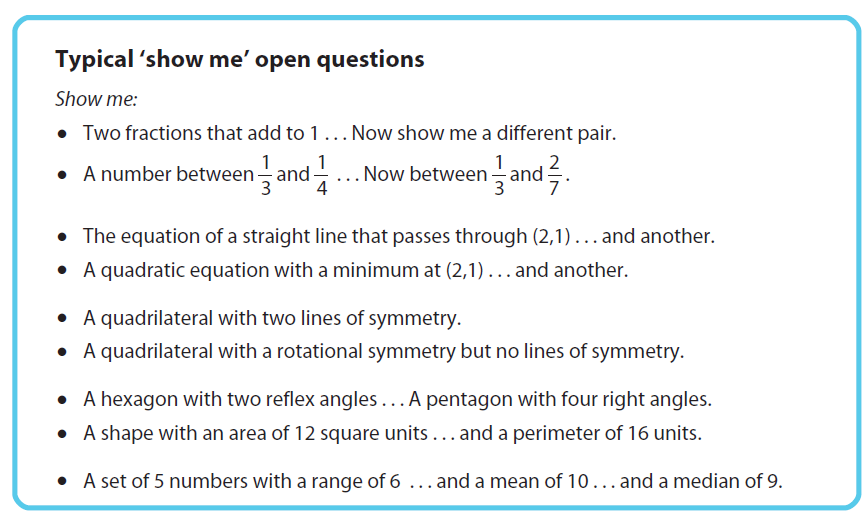
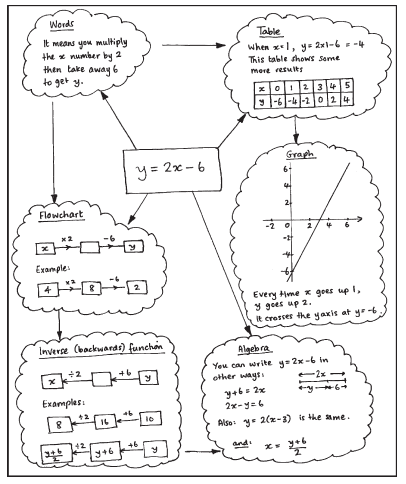
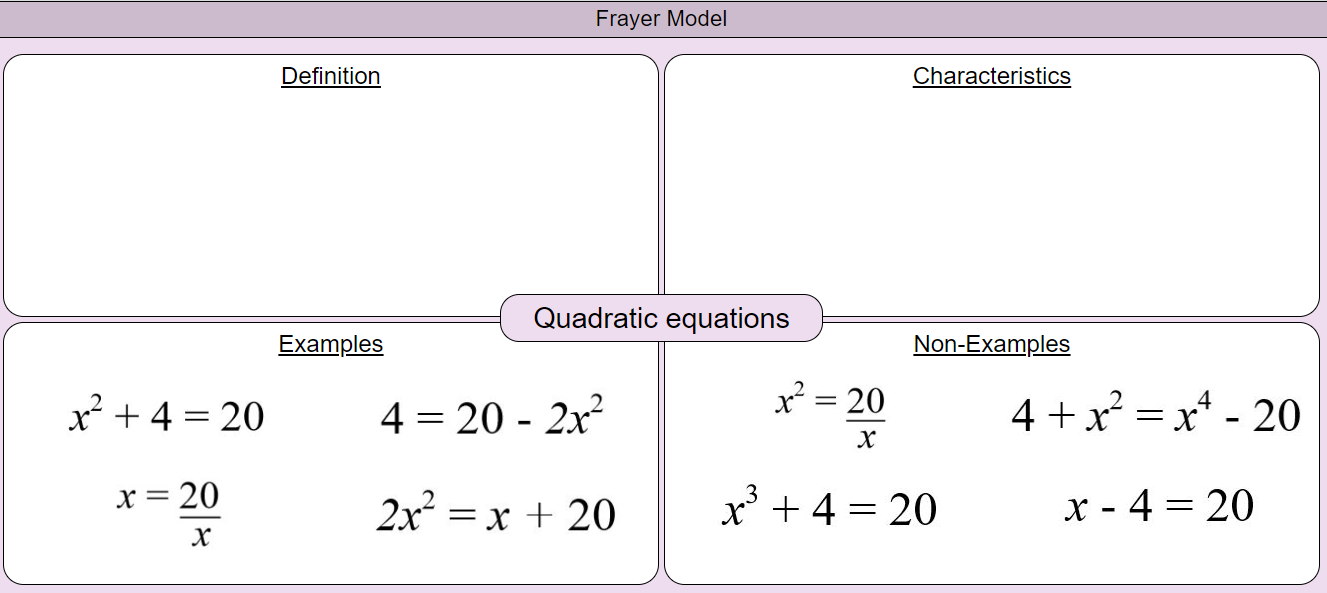
Click on the circles below to explore how we might assess for learning, and gather a rich range of evidence to document learning and encourage learning rather than the process of generating answers.
-







Unit 3: Activity 1 reflection
As outlined within the activity, there are many ways to be creative with your maths teaching. What do you feel are the benefits of the rich tasks over more traditional assessments / teaching methods, please share your experience of using / developing such tasks.
In your answer try to also consider additional impacts such as SNSA results from P7 testing
-
Activity 2
Setting or mixed ability?
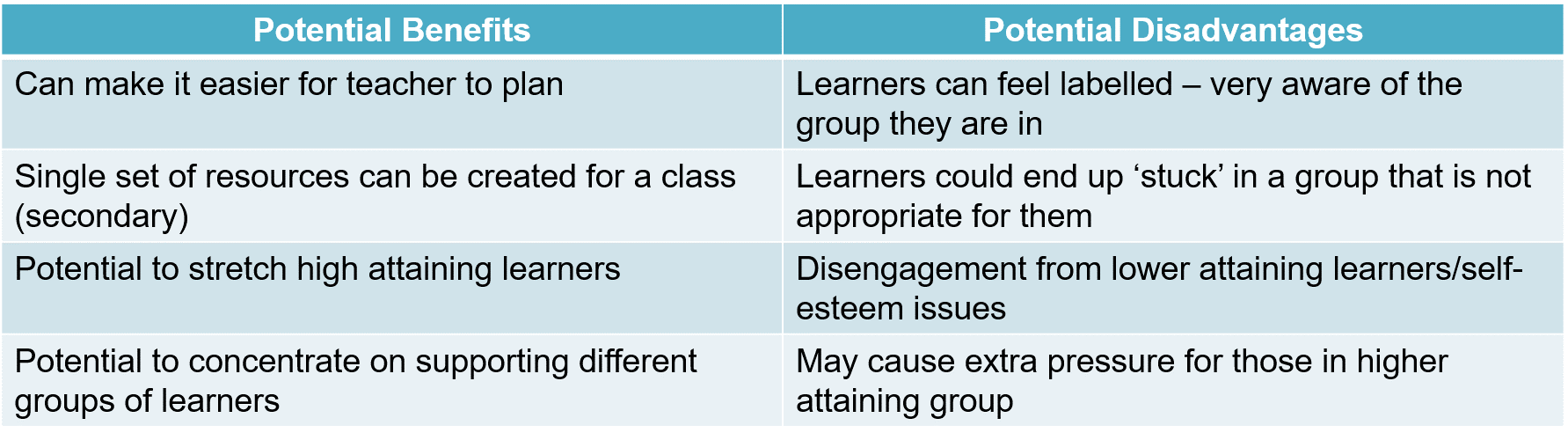
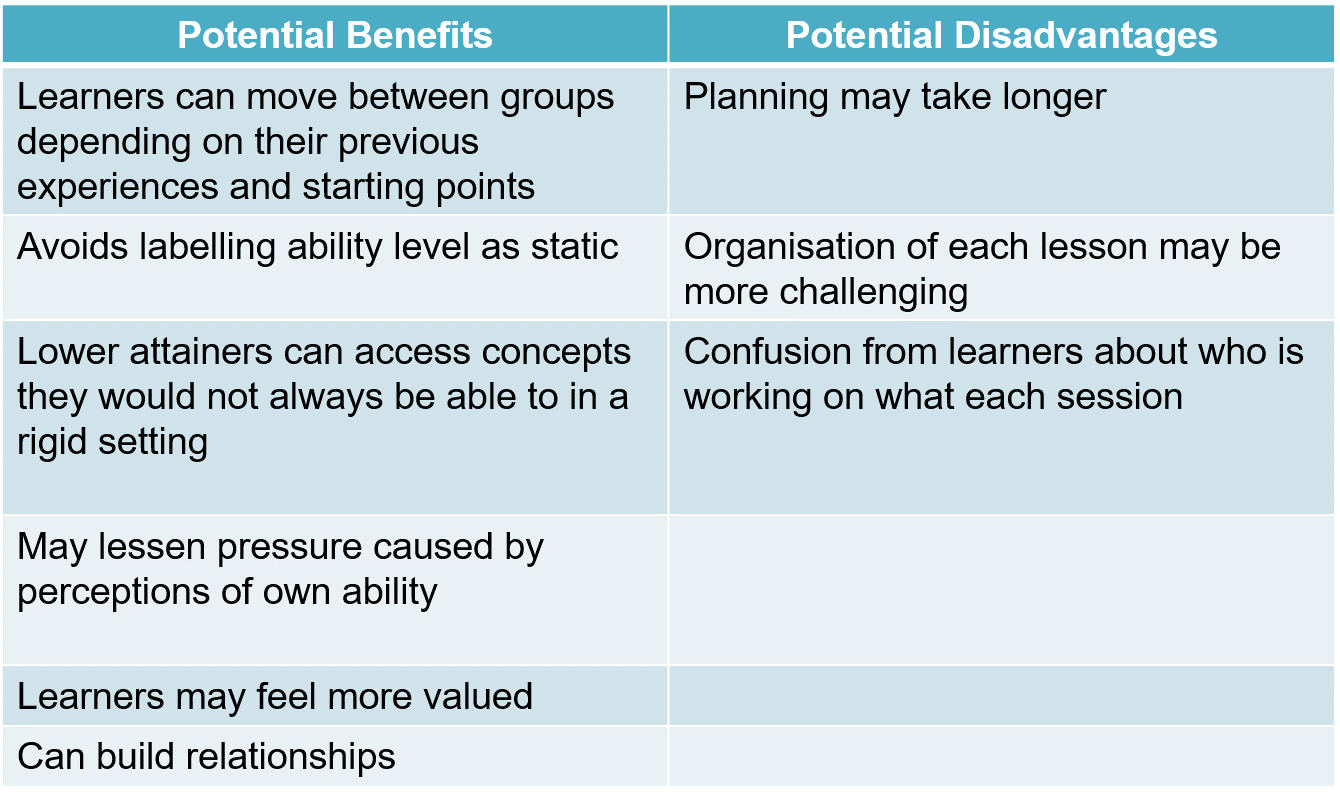
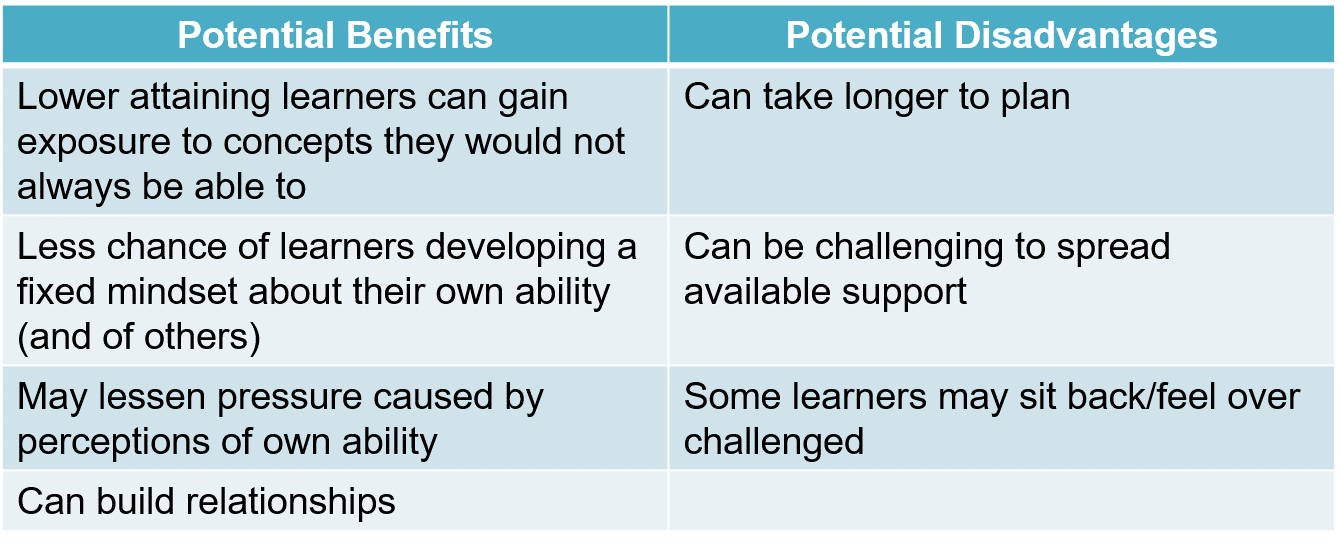
There are several ways that classes or departments group may their learners: by ability grouping or 'setting', flexible grouping or mixed ability grouping*. Many have researched and written extensively about the benefits and pitfalls of each of these approaches, but can the structure of groupings have an impact developing a growth mindset culture?
Learning is a social practice, through which we come to know who we are and develop a sense of identity (Lave and Wegner, 2014). Through participating in a community of practice (in this case mathematics) learners come to not only learn mathematics, but also acquire a sense of who they are as learners within the social practice of mathematics (Lave and Wegner, 2014). Perpetuated by the evidence base that setting and streaming perpetuate social class divisions (Boaler & William, 2001) perhaps rather than attainment being the driver for pedagogic change we should consider social justice and mindsets in mathematics being the driver, and mixed ability being a vehicle through which we can affect equitable change? Furthermore, what messages are we sending to learners by putting them in set classes, based on a perceived ability?
Prof. Hattie and Jo Boaler explore these ideas in the following videos.
Although there is an argument that mixed ability groupings (or mixed attainment groupings) can promote positive mindsets in learners, the thought of a move towards this mode of delivery is often a contentious subject for teachers of mathematics. There are very valid concerns around the level of planning required to effectively attend to all learners, the spread of support required to ensure needs are met (whether that be through content, process or product/outcome or form of assessment) and the lack of equivocal evidence on the impact on attainment when compared to setting, amongst many others.
However, this is not to say it can’t be done, and with great success. Read the following to learn about some of the challenges faced by mathematics departments across Scotland when they moved to a mixed ability structure, and how they overcame them.



Unit 3: Activity 2 reflection
Setting and mixed ability classes have no conclusive evidence of an impact on attainment one way or the other, mixed ability does seem to have an impact on confidence, positive attitudes and engagement. Will this increase the number of learners studying maths beyond the point where they “have to”?
What sense of identity are we creating for young people through setting?
If setting, how do you allow for differences in ability in different aspects of mathematics?
-
-
-
-
Activity 5
Homework
Studies have shown that, whilst the impact of homework on younger children is debatable, it's more effective for older children. The Education Endowment Fund (2018) summarise an increase in attainment that can vary between two to eight months of progress, depending on the homework. For example, routine practice tasks or learning vocabulary can have a two month progress increase, whereas a short and focused intervention style piece of work can show up to eight months of progress. Progress is also affected by how well the homework relates to class learning. Evidence suggests that levels of engagement with homework and its impact are correlated, with opportunities for learners to make connections with out-of-school life having been noted as increasing engagement.

Additionally, homework has been found to have far wider impact on learners rather than just progressing their learning or attainment, for example keeping parents abreast of what's happening in school and developing wider skills such as time-keeping, prioritising workloads and working to a deadline (See 10 Ps of Homework). Position and flow of homework should also be considered; does it continue the work in a preceding lesson or is it preparatory? If it’s preparatory is there a risk to participation in the lesson if not competed?
Cathy Vatterott (2010) identified five fundamental characteristics of good homework: purpose, efficiency, ownership, competence, and aesthetic appeal.
- Purpose: all homework assignments are meaningful and students must also understand the purpose of the assignment and why it's important in the context of their academic experience (Xu, 2011).
- Efficiency: homework should not take an inordinate amount of time and should require some hard thinking.
- Ownership: students who feel connected to the content and assignment learn more and are more motivated. Providing students with choice in their assignments is one way to create ownership.
- Competence: students should feel competent in completing homework. In order to achieve this, it’s beneficial to abandon the one-size-fits-all model. Homework that students can’t do without help is not good homework.
- Inspiring: A well-considered and clearly designed resource and task impacts positively upon student motivation.
Read the following articles to explore further:
While there is a lot of debate associated with homework, the outcome should not be harmful to a pupil's learning. There is a wealth of information about the benefits of home work on the Stanford University website - here
Further reading is available in the additional reading folder.
Unit 3: Activity 5 reflection
How do we ensure homework is purposeful, meaningful, engaging and allows for effective formative feedback?
-
Activity 6
Disconnect from BGE to Senior Phase
Curriculum for Excellence was envisaged to be a seamless, integrated curriculum from ages 3–18. As outlined in CfE Briefing Paper 6 , Progression from the Broad General Education to the Senior Phase, Part 1: The S3 Experience:
“New National Qualifications have been designed to build on the Es and Os of the BGE. As such, learning can progress seamlessly through S3 into the Senior Phase when, at an appropriate point, the learning will be measured within the qualifications framework.”

In its review of the BGE , the OECD states that “CfE represents an ambitious and important departure that has sought to develop a coherent 3-18 curriculum around capacities and learning, rather than school subjects, taking a different approach to assessment and national prescription from what was in place before”(OECD, 2015, p 37).
However, Building the Curriculum 3 states that “Subjects are an essential feature of the curriculum, particularly in secondary school. They provide an important and familiar structure for knowledge, offering a context for specialists to inspire, stretch and motivate. Throughout a young person’s learning there will be increasing specialisation and greater depth, which will lead to subjects increasingly being the principal means of structuring learning and delivering outcomes.”
Whilst the Es and Os outlining the 3–15 BGE were designed by Education Scotland, the design of the 16–18 curriculum was the responsibility of the SQA. Courses studied for qualification are designed around a nominal 160 hours of study with schools free to design the curriculum which best suits their local needs. Scott (2018) found that, in practice, this has led to a fragmentation in the late stages of BGE and into the Senior Phase, with schools offering between five and eight subjects in S4 (with a handful leaving exam presentation until S5). The Scottish Government has recently announced a review into the Senior Phase.
Unit 3: Activity 6 reflection
What changes would you like to see in either late Primary, early Secondary or the Senior Phase to make CfE a seamless, integrated 3 – 18 curriculum?
-
Please complete this short questionnaire to establish your thoughts at this stage. You must complete this survey before you can continue with this course
-